 David Simutis
1 min read
Why CTV Targeting Fails Marketers And How To Fix It
Streaming audiences are expanding, content options are exploding, and brands are pouring budgets into premium, lean-back environments.

Free ad-supported TV (FAST) buying often starts in a familiar place: advertisers pick a set of apps, layer on genre, maybe lean on a few curated deals, turn on optimization, then let it scale.
That approach works well enough to get campaigns live; however, it’s less effective when the goals are to understand what actually ran and why performance looks the way it does.
That’s because FAST introduces a different set of conditions and constraints. The same show can arrive through multiple supply paths with different metadata. Entire portions of inventory carry little to no program-level context. Buyers regularly make decisions based on signals that don’t consistently describe the underlying content.
Getting FAST right means adjustments from auditing before allocating spend. Here’s how to do it.
1. Audit signal quality before allocating spend
Before increasing FAST budgets, it helps to understand what signals are actually present in the inventory being bought.
Across CTV more generally, roughly 35% of bid requests arrive with usable program-level data. FAST is better at that than subscription services and standalone apps.
When signal coverage looks like this, common optimization inputs start to lose their footing:
A signal audit can surface these issues early by giving a clearer view into how much of the campaign can actually support content-level decisioning.
2. Evaluate supply paths based on signal completeness
Not all FAST supply paths carry the same level of detail. A single publisher, for instance, can pass rich program-level metadata through one SSP and minimal data through another. While such paths may look similar from the outside, they behave very differently.
Evaluating supply paths through a signal lens means asking three questions:
Paths with stronger signal coverage allow buyers to verify and optimize against actual content. Paths without it limit visibility, even when they offer similar scale or pricing.
3. Understand where app-level and deal-based buying fall short
App-level buying provides access, but not precision.
A FAST app may aggregate channels, genres, and programming under a single identifier. The bidstream doesn’t consistently indicate what is playing at the moment of the impression.
Deal-based buying introduces structure, but carries similar constraints. Curated packages group inventory without resolving how that inventory is described at the impression level.
These approaches simplify how inventory is accessed, but they do not guarantee clarity into what’s being delivered.
4. Boost targeting precision with program-level signals
When program-level signals are verified in this way, the mechanics of FAST buying shift.
Authenticated signals (show title, genre, content rating, device confirmation) anchor each impression to a known piece of content. That makes it possible to target and evaluate FAST inventory with a level of specificity that app-based approaches cannot provide.
It also changes how optimization behaves. Algorithms learn from the inputs they receive. When those inputs include verified content data, optimization aligns more closely with the environments buyers intend to reach. When inputs are incomplete, optimization uses whatever signals remain available.
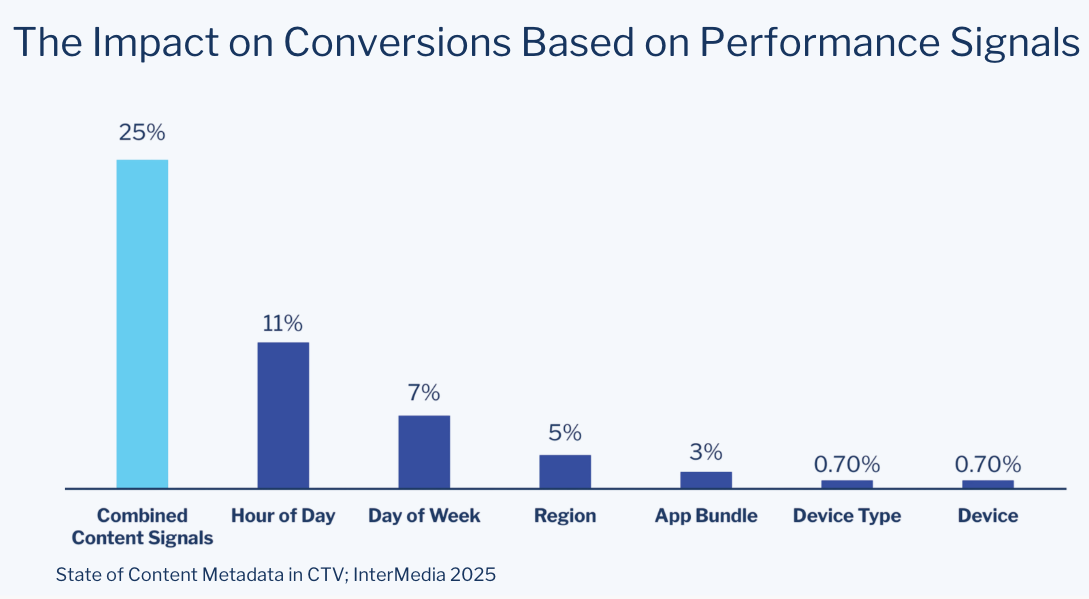
Peer39 refers to the performance lift from verified inputs as the “Signal Dividend.” Conversion analysis shows content-level signals contributing to 25% of outcomes, compared to 3% for app-level data.
Making FAST work for you
In practice, buying FAST this way comes down to a few consistent shifts:
FAST already contains the programming buyers are trying to reach. The challenge is identifying it consistently in the bidstream and acting on it with confidence.
To see how this plays out across real campaigns and supply paths, download the full report: Getting FAST Right: A Signal-First Approach to Buying FAST.
-1.png)
1 min read
Streaming audiences are expanding, content options are exploding, and brands are pouring budgets into premium, lean-back environments.
.png)
1 min read
The most expensive impressions in any campaign are the ones you keep buying after you know they are underperforming.Mid-flight optimization exists to...

.png)