 David Simutis
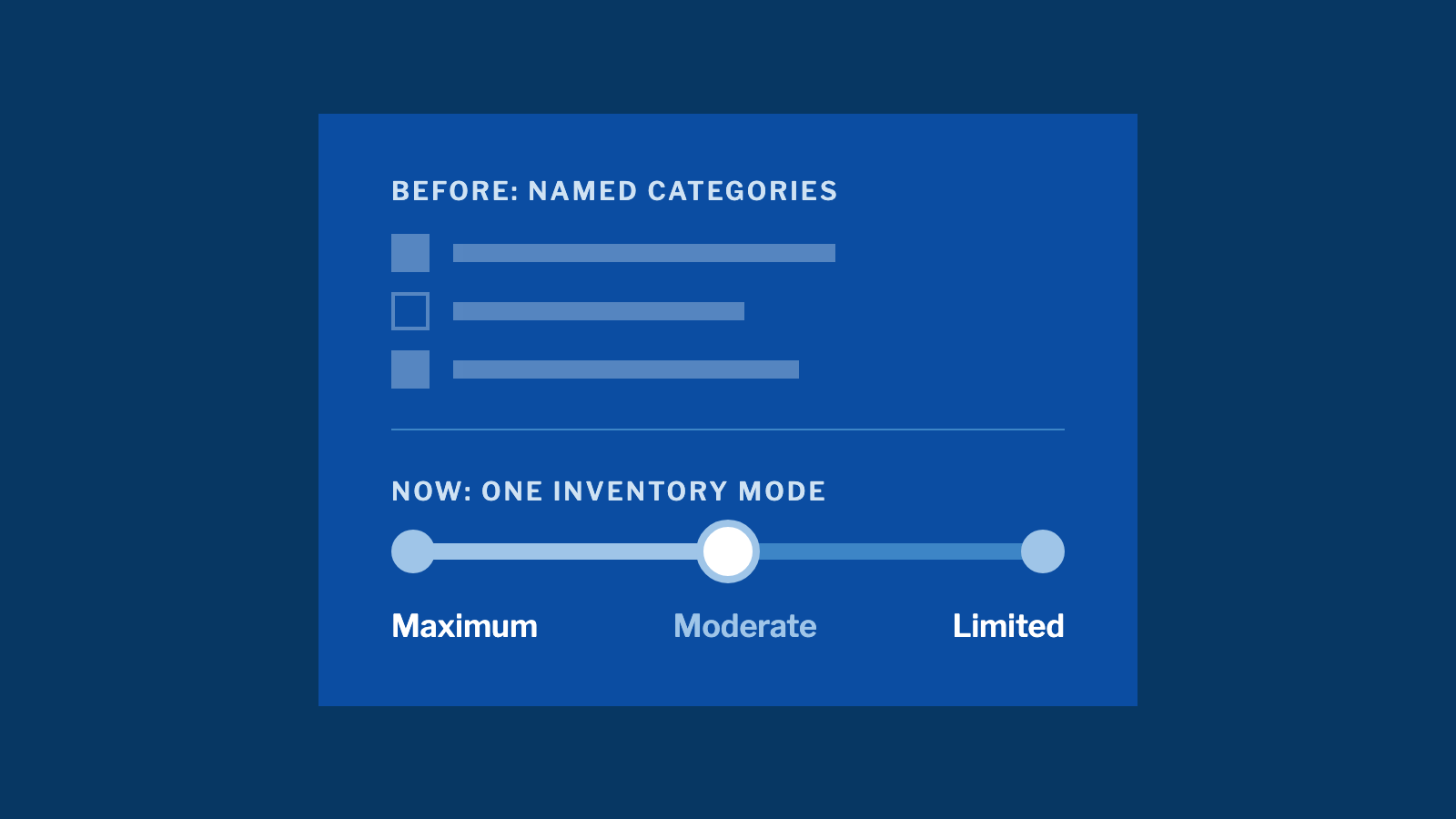
On October 1, 2026, Google changed how brand suitability works for programmatic buying in Display & Video 360 (DV360). Sensitive categories and digital content labels are deprecated for open web display, video, connected TV (CTV) and audio. Programmatic now runs on YouTube's controls: three inventory modes and ten content themes, set once for the whole advertiser.
What changed in DV360 brand suitability on October 1, 2026?
Before October 1, advertisers excluded the content they did not want, category by category. Sensitive categories and digital content labels were the named controls advertisers used to exclude specific kinds of content, and a ticked box for a named sensitive category was a control a brand team could point to.
After October 1, advertisers pick one inventory mode (Maximum, Moderate or Limited) and can exclude content themes. DV360 lists ten: Content Suitable for Families, Games (fighting), Games (mature), Health (sensitive), Health (source undetermined), News (recent), News (sensitive), News (source not featured), Politics, and Religion. Google's machine learning models decide what each mode lets through.
Google's reasoning is fair: one consistent, model-driven system across YouTube and programmatic, without duplicate settings. For a platform that serves every kind of advertiser, a simple default makes sense.
How does the DV360 change affect advertisers who relied on sensitive categories?
Advertisers who relied on Google's sensitive category exclusions face four changes: no named control for each category, one setting for every channel, less granular suitability choices, and less proof to show a brand team.
- Named categories lost their named control. Alcohol, tobacco, drugs and weapons have no theme of their own. They are now handled inside the inventory modes and content themes.
- One setting now covers every channel. The mode applies across YouTube, open web, CTV and audio together. Tighten it to protect one channel and it tightens everywhere.
- Suitability is less granular. A brand that must stay away from alcohol but can accept moderate risk elsewhere has no named alcohol setting. The three modes move everything at once.
- Proof is harder to show. When a legal or brand team asks how a campaign kept clear of alcohol content, a mode setting doesn't show which categories were excluded.
Why don't DV360's content themes match brand safety standards?
Many brand guidelines and agency standards are not written in DV360's themes. They are written against the industry standard brand safety and suitability framework, formerly known as GARM, which uses named categories with risk tiers. DV360's ten themes are a different list, so a brand's own standard and the DV360 setting don't line up category by category.
How can advertisers bring named brand safety categories back into the buy?
Peer39 offers pre-bid categories that buyers can apply in their DSP. Pre-bid means the decision is made before the bid, not after the impression is bought.
With pre-bid categories, the inventory mode can stay in place as the floor while the brand's specific standard sits on top of it. An advertiser does not have to push every channel into the strictest mode to recover one exclusion.
Rebuild your DV360 brand safety controls in one conversation
If your DV360 campaigns relied on sensitive category exclusions before October 1, start with that list. Share the categories you used to exclude, and the Peer39 team will review which pre-bid categories can cover them.
Frequently asked questions
What are the three DV360 inventory modes?
DV360's three inventory modes are Maximum, Moderate and Limited. Since October 1, 2026, advertisers pick one mode for the whole advertiser, and Google's machine learning models decide what each mode lets through across YouTube, open web, CTV and audio.
Can you still exclude alcohol content in DV360?
Alcohol has no content theme of its own in DV360. It is now handled inside the inventory modes and content themes, so there is no named alcohol setting. An advertiser that wants a specific alcohol exclusion has to look beyond the mode, for example to pre-bid categories applied in the DSP.
Does the DV360 inventory mode apply to CTV?
Yes. The inventory mode applies across YouTube, open web, CTV and audio together. Tightening it to protect one channel tightens it everywhere, so a stricter setting for CTV also changes what display, video and audio campaigns can buy.
