

Pre-bid Quality Controls Across All Media Environments.

Verification

No Verification Fees

CONTACT US
verification header

Why Peer39 for Verification?


Most verification stops at three questions: was the impression viewable, was the traffic real, was the content safe. Those questions matter, but they were never the whole job. They confirm an impression cleared a minimum bar. They don't explain what a buyer actually bought.

Peer39 treats verification as the layer that explains the media itself, not just a pass or fail check on top of it. In CTV, that means knowing the program, genre, rating, content advisories, and live status behind an impression, not just confirming an ad rendered on a screen. In display, it means URL-level context instead of a domain-level guess. In mobile apps, it means category granularity fine enough to separate two apps in the same store category, since invalid traffic and quality both vary widely within a single category. Across social platforms, it means suitability and attention signal that travels with the buy instead of stopping at the platform's edge.


That intelligence has to arrive before the bid to matter. A report that lands after the campaign confirms what already happened. A pre-bid signal changes what happens next. Peer39 doesn't charge separately for reporting, because reporting's only job is proving the pre-bid controls worked, not serving as the primary line of defense on its own.

Verification without reporting fees

Most verification is a post-buy exercise: a report confirming what already happened, after the money is spent.

Peer39 applies verification standards before the bid is placed, so brand safety, fraud, viewability, and quality controls shape the buy instead of describing it afterward. Post-buy reporting still matters. It confirms the pre-bid controls worked, rather than serving as the primary line of defense.

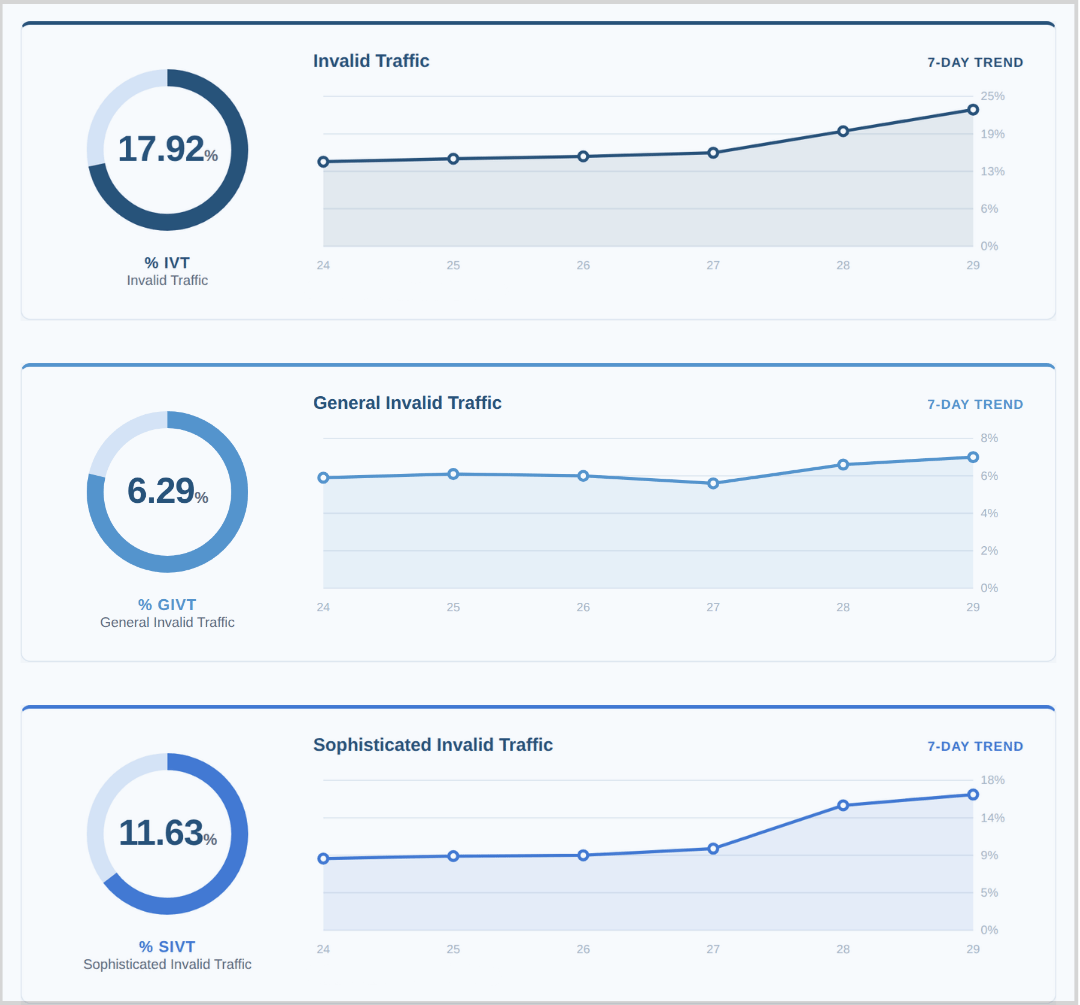
IVT GIVT SIVT

How Peer39 verifies your ad spend:

brand-safety-square

Brand safety and suitability

Keep placements away from content that damages brand reputation, and apply a brand's own tolerance beyond binary safe and unsafe, before the bid. Program-level categories in CTV, risk categories, and off-the-shelf safety and suitability categories, applied the same way whether the impression is a CTV program, a display placement, or a social feed. Brand safety categories include violence, adult content, hate speech, and other risk categories. Brand suitability tiers add brand-specific tolerance beyond binary safe and unsafe. 

fraut ivt square 400

Fraud and invalid traffic (IVT)

Fraud detection and filtration reduces wasted spend with pre-bid categories, so budgets aren't spent on invalid traffic in the first place.

Advertisers typically see invalid traffic fall from around 12% to 3% within a month, with some campaigns dropping from 20-40% down to under 1%.

viewabillity square 400

Viewability

MRC-accredited viewability measurement built into the same pre-bid signal, measured to the IAB/MRC standard, so it's one signal instead of a separate report to reconcile against what was targeted. Coverage runs down to the individual supplier, domain, placement, and ad unit, so a buyer knows exactly where an impression appeared, how long it stayed in view, and whether it met the threshold, not just a rolled-up rate for the whole campaign.

ctv quality score square 400

CTV Quality Score

A single 0-100 score blending completion rate, valid channels, divisive news, user-generated content, fake content, and overnight starts into one number a buyer can act on. Because knowing an ad appeared on a television screen doesn't say what was actually playing. Program, genre, rating, and content advisories change how an impression should be valued, and a single score gives buyers a fast way to act on that difference without reading six disconnected reports.

Precision in verification


Verification isn't one checkbox

A single "safe, human, viewable" pass confirms an impression wasn't disqualified. It doesn't confirm the impression was right for a specific brand or campaign. What counts as complete verification changes by channel:

  • CTV: program-level signal, including show, genre, sub-genre, rating, content advisories, live status, and originating network

  • Display: URL-level context, since one placement on a login page can perform nothing like a placement inside an article on the same domain

  • Mobile apps: category granularity fine enough to separate environments where invalid traffic and quality diverge sharply, even within the same broad app category

  • Social: suitability and attention signal that extends into the platform, using the same standard applied on the open web

Peer39 extends pre-bid standards across all of it, so brand safety, fraud, viewability, and quality controls are shaping the buy on every impression, not reporting on it after the fact.

Contact Peer39


Get Started